Fix It Mid-Spin
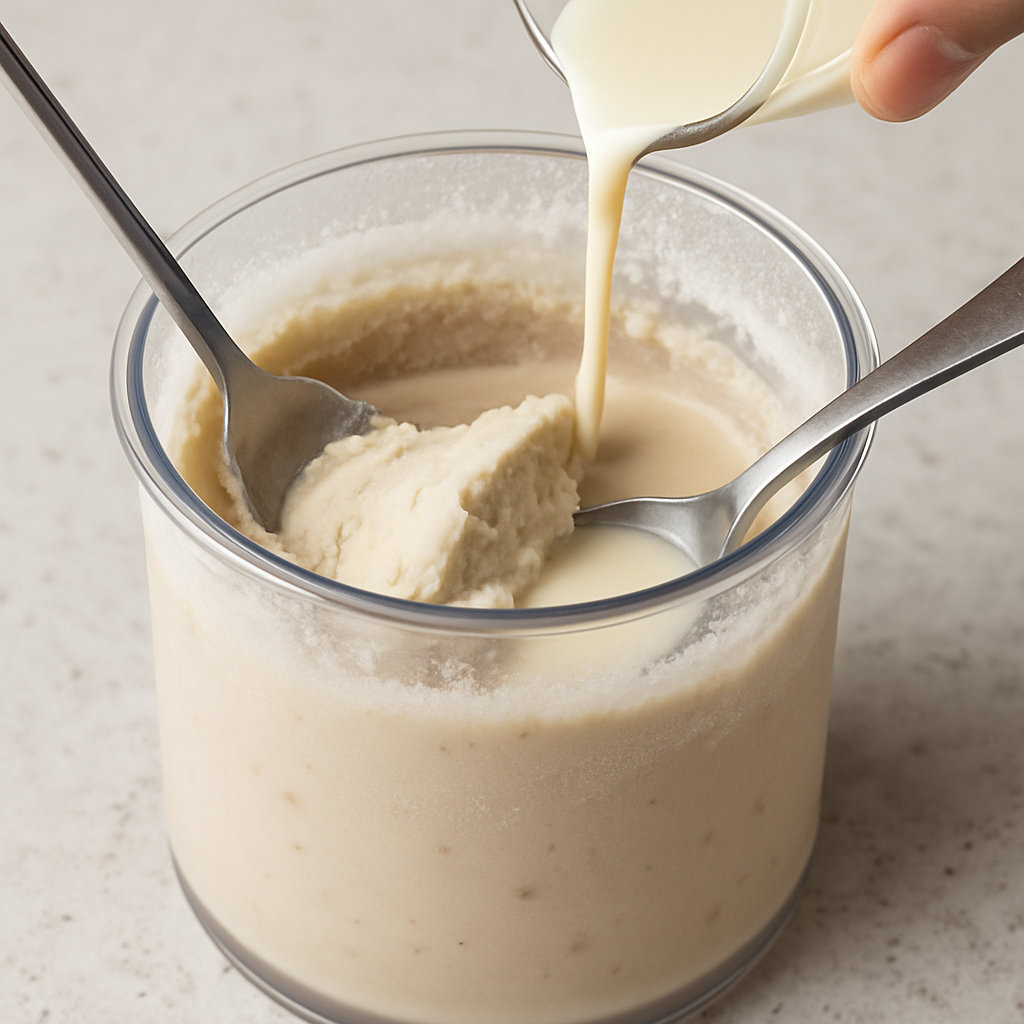
- Scrape the sides all the way down after the first spin to pull icy rims into the center.
- Add 1 tbsp liquid (milk, plant milk, or base liquid) to equalize moisture and temperature.
- Re-Spin once and check again. If still sandy, add a second tablespoon and one more Re-Spin at most.
Tip: If the core is hollow (“tunneling”), fork-fluff the center into the void before your Re-Spin.
Prevent It Before Freezing
- Hydrate powders fully: blend, rest 5–10 minutes, then stir again to dissolve stubborn clumps.
- Freeze level: smooth the surface and use a tray if shelves aren’t flat.
- Avoid extreme cold zones: back vents and deep-freezer corners over-chill and stratify pints.
- Respect the fill line: too little base crumbles; too much stalls and stratifies at the rim.
- Surface film: press parchment or plastic wrap on the surface to limit frost and moisture loss at the edges.
When It Keeps Coming Back
- Increase liquid sugar slightly (in 1 tsp steps) to lower freeze point and soften texture.
- Add a little fat to lean bases: 1 tsp neutral oil or 1 tbsp nut butter improves body and slows iciness.
- Stabilizer pinch: ⅛ tsp guar or xanthan in dairy-free or high-protein bases helps water binding (hydrate in warm liquid first).
- Storage discipline: keep pints off the door; group them together to reduce temp swings.
Quick Diagnose: What Caused It?
| Symptom | Likely Cause | Immediate Fix | Prevent Next Time |
|---|---|---|---|
| Icy rim, creamy center | Warm door storage; unlevel shelf; surface not covered | Scrape rim, add 1 tbsp liquid, Re-Spin | Store center shelf, freeze level, add surface film |
| Dry, sandy core | Under-hydrated powders; base too cold | Temper 10 min; add 1 tbsp liquid; Re-Spin | Blend → rest 5–10 min → stir; avoid vent zones |
| Tunneling during spin | Domed top; mix too thick | Fork-fluff core; add 1 tbsp liquid; Re-Spin | Level surface; loosen thick bases pre-spin |
| Crumbles after Re-Spin | Underfilled pint; over-chilled edges | Add 1–2 tbsp liquid; Re-Spin once | Fill to the line; avoid deep-freezer corners |
Why It Happens (Quick Science)
- Freeze-point & crystals: Low dissolved solids (low sugar/solids) allow bigger crystals at the coldest zones—often the rim.
- Water migration: Edge dehydration during long storage or door swings promotes frost and dryness.
- Hydration chemistry: Poorly dispersed proteins/cocoa bind water unevenly, leaving dry pockets that resist the first spin.
Softening levers: small bumps of liquid sugar, a touch of fat, and proper hydration do more than extra Re-Spins.
Quick Reference: Symptoms & Fixes
| Base Type | Add (per pint) | Temper Time | Re-Spin Aid | Storage Window |
|---|---|---|---|---|
| Classic dairy | +1 tsp liquid sugar if recurring | 8–12 min | 1 tbsp milk | 2–3 weeks |
| High-protein / low-sugar | +1 tsp syrup + 1 tsp neutral oil (optional) | 12–15 min | 1–2 tbsp milk | 1–2 weeks |
| Sorbet / fruit-heavy | +1 tsp glucose/honey | 5–8 min | 1 tbsp juice/water | 1–2 weeks |
| Dairy-free (oat/coconut) | +⅛ tsp guar or xanthan (hydrated) | 8–12 min | 1 tbsp plant milk | ~2 weeks |
FAQ
Do I need to thaw first?
If rock-hard, temper 10 minutes, then Re-Spin with 1 tbsp liquid.
Why does the edge always frost?
Warm air on door openings and tilting during freeze. Store away from the door and keep pints level.
Can I prevent this with sweetener?
Yes—small increases of liquid sugar (1 tsp steps) lower freeze point and reduce edge iciness.
What about stabilizers?
A pinch (⅛ tsp) of guar or xanthan in dairy-free or high-protein bases helps bind water and curb dry pockets.