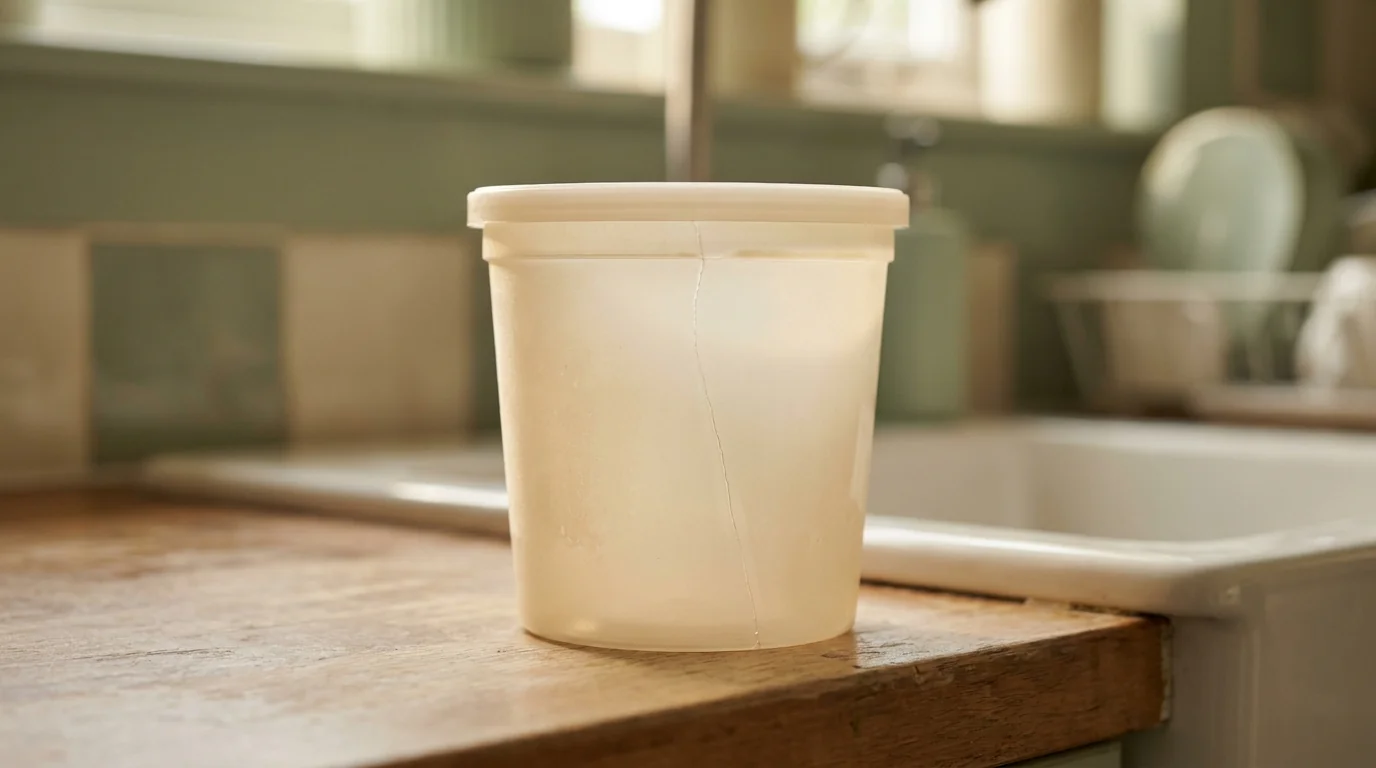
Ninja Creami pints crack from four things: thermal shock (pouring a hot base into a frozen pint, or moving a pint straight from freezer to boiling water), dishwasher heat (hand-wash them, they are not reliably dishwasher-safe), overfilling past the MAX line so the base expands against the walls, and prying at a rock-hard pint. Let each pint reach room temperature, hand-wash, and stay under the fill line.
Why Ninja Creami pints crack (the 4 real causes)
Search "ninja creami pint cracking" and you will find a wall of frustrated owners on their second or third machine. The good news: it is almost always the pint, not the motor, and the pint is a cheap, replaceable part. A ninja creami pint crack comes down to one of these four stresses on the plastic:
- Thermal shock. Plastic expands and contracts with temperature. Pour a warm or hot base into a frozen pint, or run a freezer-cold pint under hot tap water to loosen it, and the sudden swing stresses the walls until they craze and split. This is the single most common cause.
- Dishwasher heat. The heat of the wash and drying cycle, cycle after cycle, slowly embrittles the plastic. Pints that get hand-washed tend to outlast dishwasher pints by a wide margin.
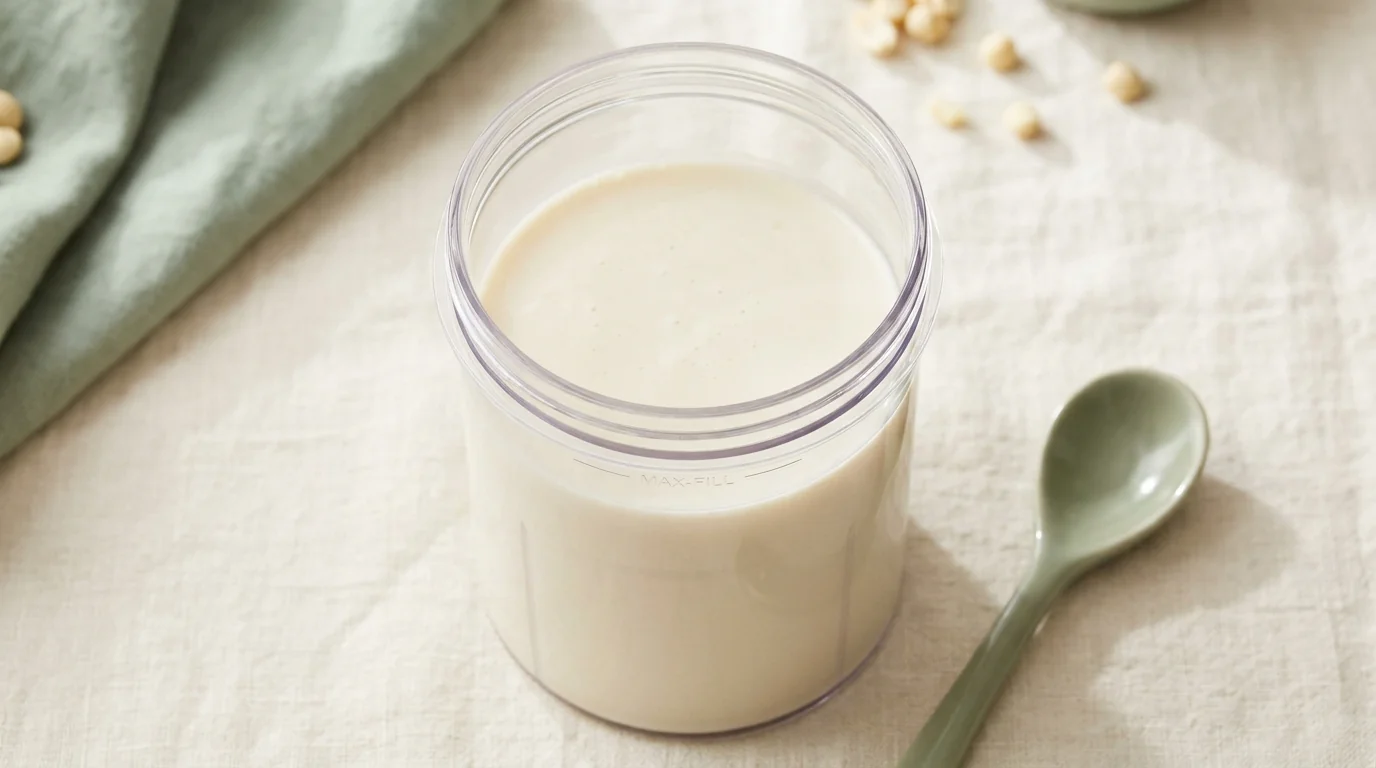
- Overfilling past the MAX line. A base expands as it freezes. Fill above the MAX line and that expansion pushes outward against the walls (and up into the paddle), adding stress every single freeze.
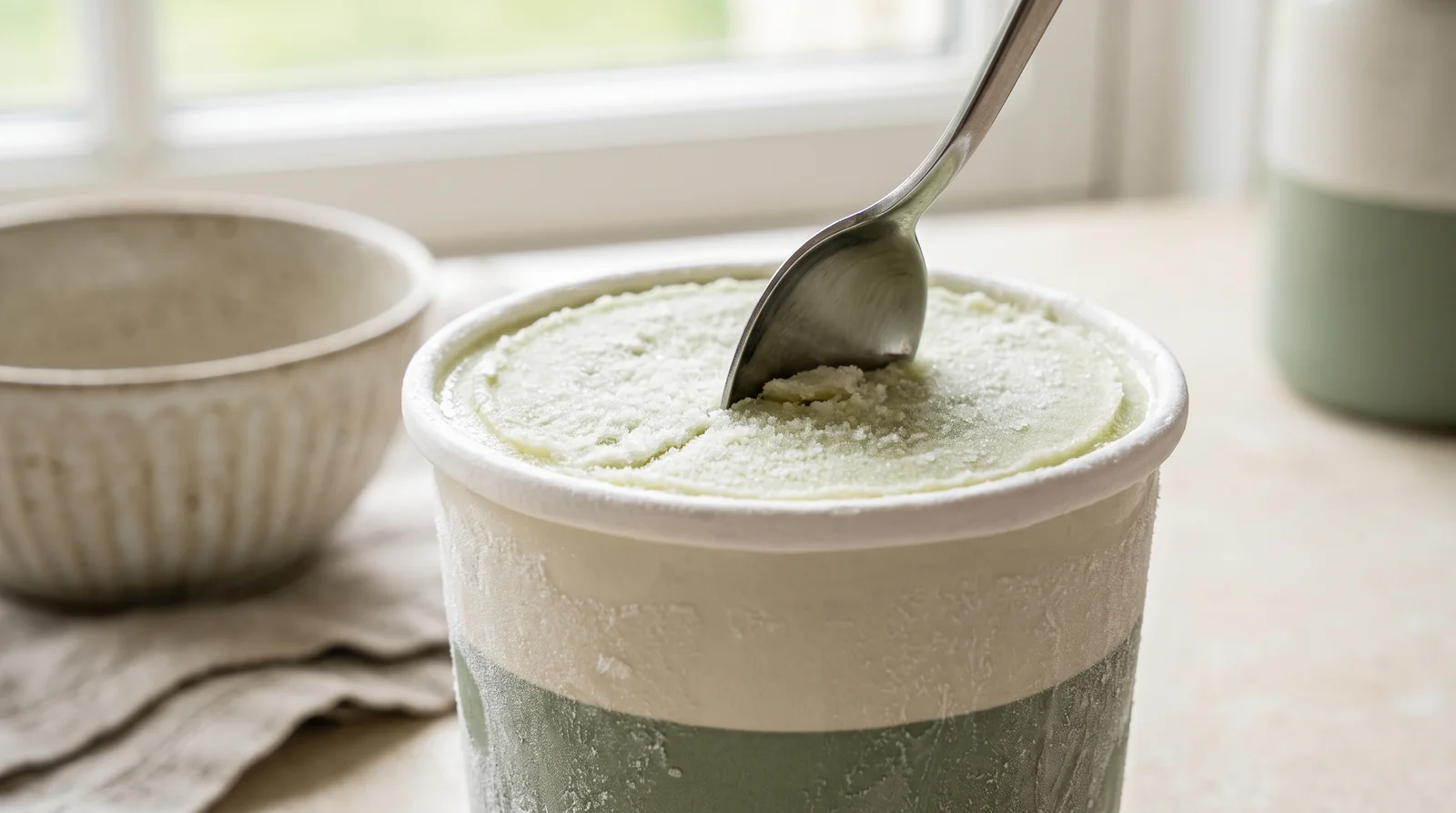
- Prying a rock-hard pint. Twisting, banging or levering a solidly frozen pint to free it from the outer bowl (or to pop the base loose) flexes cold, brittle plastic that would rather crack than bend.
Are the pints dishwasher safe? (the honest answer)
Officially, Ninja lists the pints and lids as top-rack dishwasher safe. So are ninja creami pints dishwasher safe? Technically yes, in the sense that they will not instantly melt. But the honest, community-tested answer is: hand-wash them.
The reason is simple. Repeated dishwasher cycles combine heat, harsh detergent and a hot drying phase, and that combination fatigues the plastic over weeks and months. It is one of the most reported reasons pints start to craze and crack after a few weeks of ownership. Warm water, a drop of dish soap and a soft sponge or bottle brush clean a pint perfectly, and the pint lasts far longer for it. If you value convenience over pint lifespan that is your call, but if pints keep cracking on you, the dishwasher is the first habit to drop.
How to stop your pints cracking (checklist)
Run through this list and cracking almost always stops. None of it costs anything, it is just handling:
| Do this | Why it protects the pint |
|---|---|
| Cool your base to room temperature first | Avoids the freezer-to-hot thermal shock that splits walls |
| Never pour boiling liquid into a pint | Same reason: no sudden temperature swing on cold plastic |
| Fill only up to the MAX line | Leaves room for the base to expand instead of pressing the walls |
| Hand-wash, skip the dishwasher | Removes the repeated heat and detergent that embrittle plastic |
| Let a rock-hard pint soften a few minutes before removing | Stops you prying or twisting brittle, frozen plastic |
| Store pints away from freezer walls and heavy items | Prevents knocks and pressure cracks in the coldest, most brittle state |
Two of these overlap with other Creami habits worth getting right. Overfilling is the same mistake that causes messy spins and a domed base, so see our Ninja Creami fill-line guide for exactly where the MAX line sits and why. And if your pints are coming out so solid that you are tempted to pry them, the real fix is softening them properly first, which we cover in the rock-hard Ninja Creami fix.
Blade pop-offs and the paddle: what's actually wrong
A ninja creami blade pop off sounds alarming, but it is usually not a break at all. The Creami does not use a spinning blade like a blender: it uses a paddle (Ninja calls it the Creamerizer) that clicks onto a post inside the outer bowl lid and drives straight down through the frozen base. When people say the "blade popped off," they normally mean the paddle unseated from that post.
That happens for two reasons. Either the paddle was not pushed fully onto its post before locking the lid, or the base was frozen rock-hard and well below the fill line, so the paddle hit an uneven, over-solid block and jarred loose. The fixes:
- Press the paddle firmly onto its post until you feel and hear it click home before you lock the outer bowl lid.
- Keep your base level and at (not below) the MAX line, so the paddle bites into an even surface.
- Let an over-frozen pint sit out a few minutes so the paddle is not fighting a solid brick.
If the paddle itself is cracked or a tab has snapped, that is a genuine parts issue, not a technique one, and it is replaceable separately.
When it's a warranty claim (and how to file)
Here is where to set expectations. Pints are consumable accessories, like blender jars or coffee filters, so a single cracked pint is normally treated as a replacement part rather than a ninja creami warranty repair. You can buy a ninja creami pint replacement (they are sold in packs) and carry on, which is often faster than a claim for one pint.
The warranty matters when the machine itself fails: the motor, the base unit or a manufacturing defect within the coverage window. To file:
- Find your proof of purchase (receipt or order confirmation) and the model number on the base.
- Check the warranty card or manual in your box for the exact coverage length, which varies by model and region.
- Contact Ninja support directly (phone, chat or their online form) and describe the fault, ideally with a photo.
If pint after pint is cracking, do the handling checklist above first. Nine times out of ten it is thermal shock or the dishwasher, not a defect, and fixing the habit saves you a string of replacement pints.