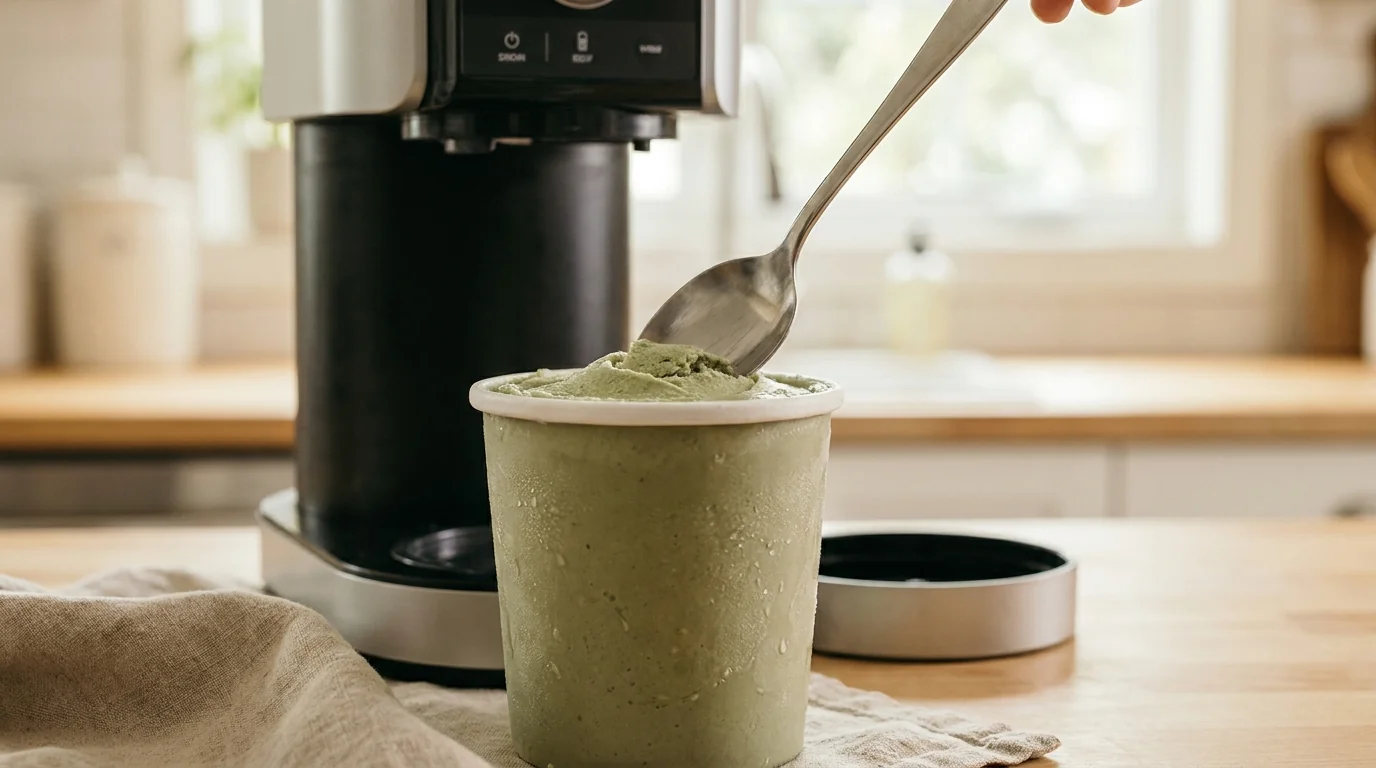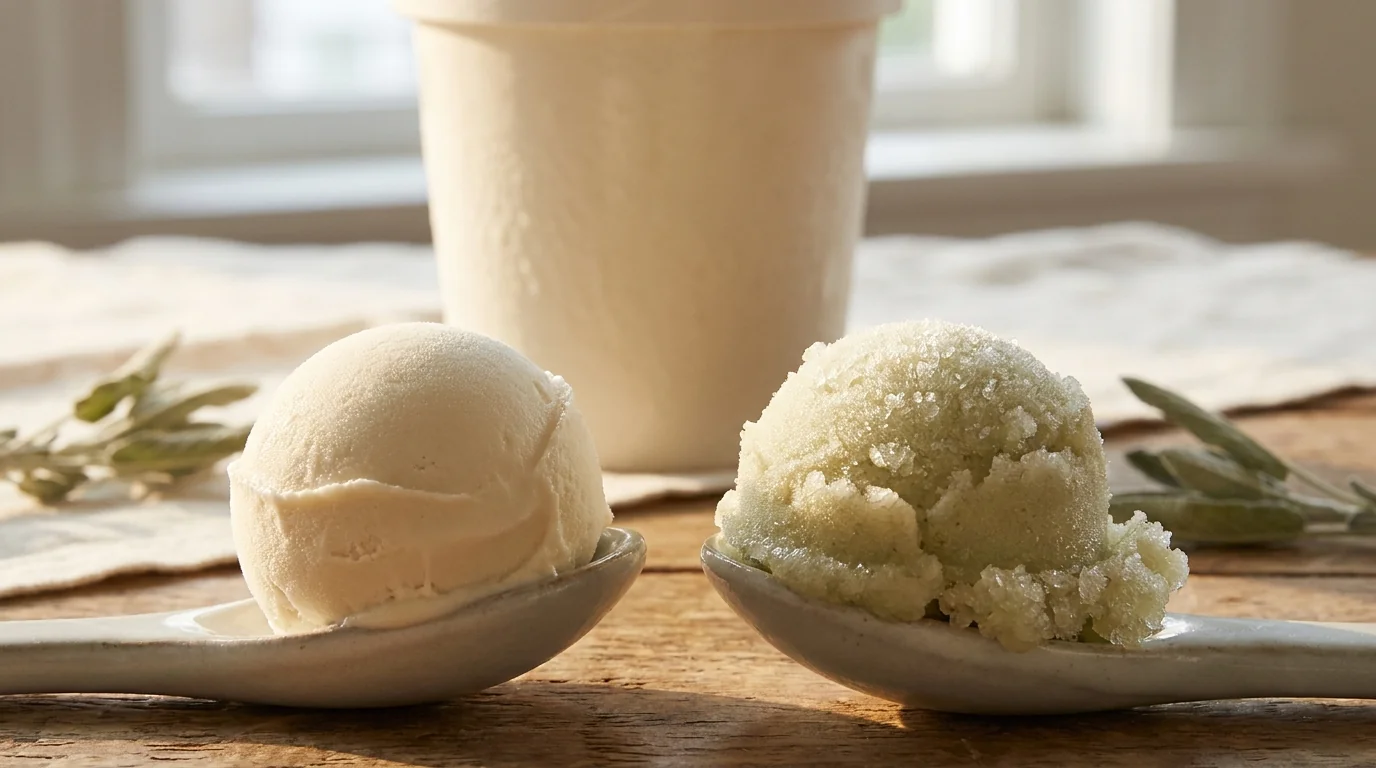
A Creami pint freezes rock hard because water freezes into solid ice unless enough dissolved solids (sugar, fat, milk solids, a stabilizer) get in the way, and sugar alcohols like erythritol make it worse by crystallizing as the pint freezes. The quick fix: let the pint sit on the counter for 10 to 15 minutes before spinning, and never microwave it.
Why Ninja Creami pints freeze rock hard
Every Creami base is mostly water, and pure water freezes into one thing: solid ice. What keeps ice cream scoopable is everything dissolved or suspended in that water. Sugars lower the freezing point so part of the mixture stays syrupy instead of frozen, fat coats and softens the structure, and milk solids, protein and starch all get between the water molecules so they cannot lock into one continuous block. Strip those out and you have flavored ice, which is exactly what a lean, watery base becomes overnight in the freezer.
Sweetener choice matters more than most people realize:
- Sugar and allulose stay dissolved and depress the freezing point, so the pint freezes firm but not glassy. This is why community recipes lean on allulose for sugar-free bases: it behaves like sugar in the freezer.
- Erythritol does the opposite at high doses. It tends to recrystallize as the base freezes, so an erythritol-heavy base can freeze even harder than an unsweetened one. Spoon-bending pints and "my teeth hurt from the cold" complaints usually trace back to this.
- Stevia and monk fruit are used in such tiny amounts that they add sweetness but essentially no freezing-point help at all.
Your freezer finishes the job. Home freezers often run at 0°F (-18°C) or below, colder than the serving temperature of any scoopable ice cream, and a pint shoved against the back wall or into a chest freezer comes out harder still. None of this means the recipe failed. It means the pint needs either a few minutes of tempering before it spins, or a base built to resist the rock-hard freeze in the first place.
The counter-thaw rule: 10 to 15 minutes before you spin
The single most useful habit: take the pint out, set it on the counter, and wait 10 to 15 minutes before spinning. You are not melting it, you are tempering it, letting the outer few millimeters rise a few degrees so the blade shaves cream instead of chiseling ice. A slightly tempered pint spins smoother, needs fewer respins, and is far less likely to come out powdery or crumbly on the first pass.
To be clear, the machine does not require this. The Ninja Creami is designed to process pints frozen completely solid; that is the whole premise of the 24 hour freeze in the standard method. But "can process" and "spins best" are not the same thing, and a pint straight from a very cold freezer sits at the harsh end of what the blade has to fight through. Ten to fifteen minutes on the counter (or about 30 minutes in the fridge, if your kitchen runs hot) splits the difference nicely.
The one thing you should not do is over-thaw. A pint left out for 45 minutes develops a melted ring around the edge, and melted base that refreezes turns into exactly the large, crunchy crystals covered in our icy Ninja Creami fix. Temper, do not melt.
Thawing, microwaving and the warranty debate: an honest take
Spend ten minutes in any Creami community and you will find a running argument. One camp swears by the counter thaw. Another warns "do NOT thaw," arguing that Ninja built the machine to spin solid pints and that softened pints spin unevenly or risk the machine. A third camp microwaves pints for 10 to 30 seconds to speed the whole thing up. Here is where we land, honestly labeled.
Ninja's standard method is to freeze the pint for 24 hours and process it straight from the freezer; nothing in the basic instructions calls for thawing first. We have not seen an official Ninja statement that a brief counter thaw damages the machine or voids anything, so treat the stronger claims on both sides of the thaw debate as community folklore rather than manufacturer guidance. A 10 to 15 minute temper is general community practice that millions of spins have not managed to controversialize into an actual documented problem.
Microwaving is a different story. The pint containers are not built as microwave cookware, and warped, softened or shrunken pints are a commonly reported outcome among people who tried it. A warped pint can sit unevenly in the outer bowl, which matters in a machine spinning a sharp blade at high speed. Since the counter does the same job for free and without risk, we see no reason to put plastic in the microwave. You will also see glycerin, allulose and gum blends recommended as softening fixes in these threads; those are legitimate freezing-point and binding tricks (again, community practice, not official guidance), and the stabilizer approach below packages the same science into one scoop of mix.
Storing leftovers so they do not turn to rock
Half a pint left over? Store it right and it comes back well:
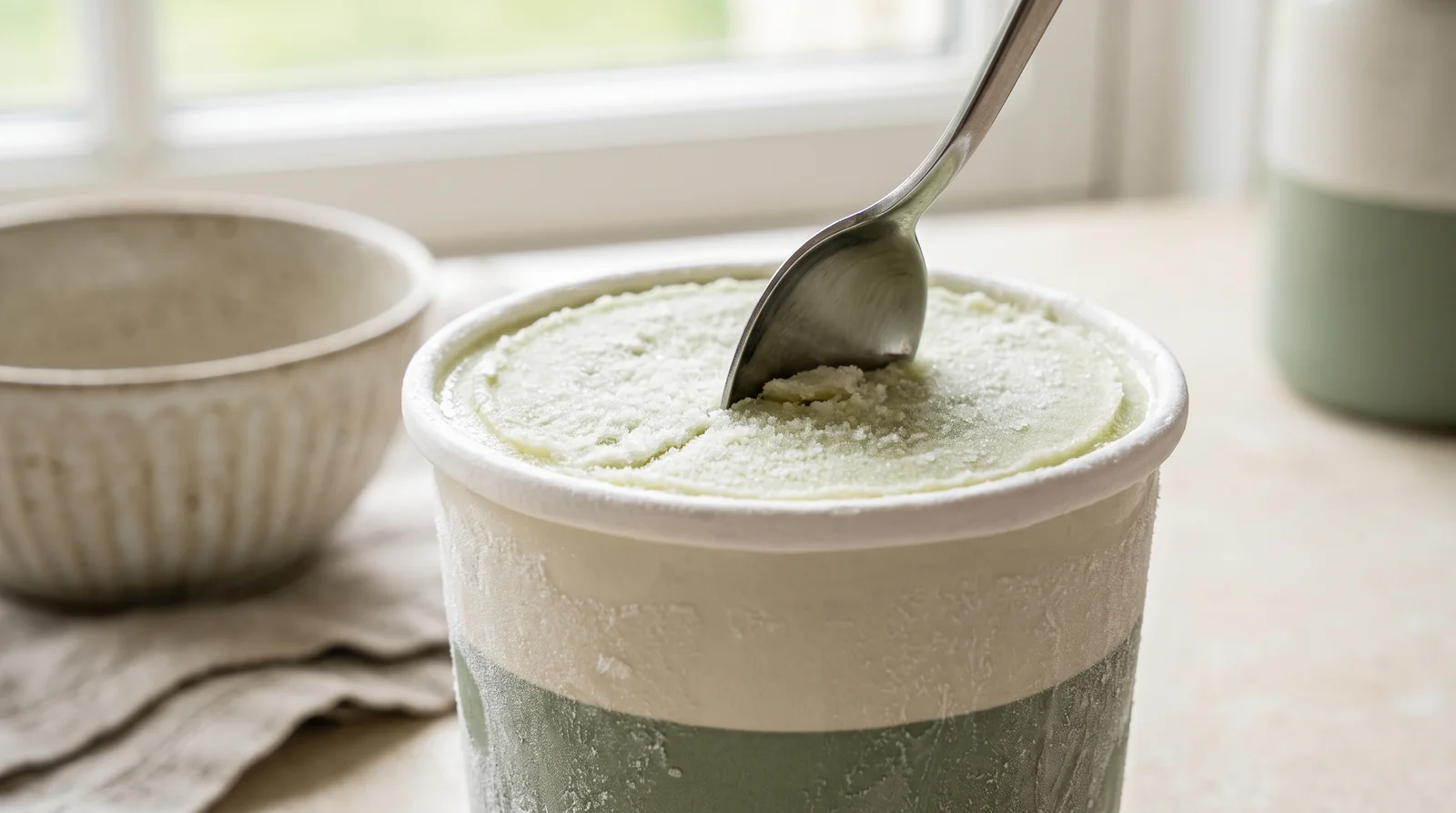
- Smooth the surface flat with the back of a spoon. A level surface refreezes evenly and protects the blade and processor from an off-balance start.
- Lid on, straight back to the freezer. An airtight lid limits freezer burn and surface frost.
- Expect it to refreeze harder than the first spin. That first spin whipped air into the base and broke the ice into a fine structure; refreezing collapses the air out and the water sets into a denser block. This is normal, not a failure.
- Plan on a respin with a splash of milk. One Respin cycle, with a tablespoon or two of milk poured over the surface if it froze especially solid, brings leftovers back to scoopable. Our respin guide covers how many rounds a base can take and exactly when to add liquid.
Prevent it up front: build a base that refuses to go rock hard
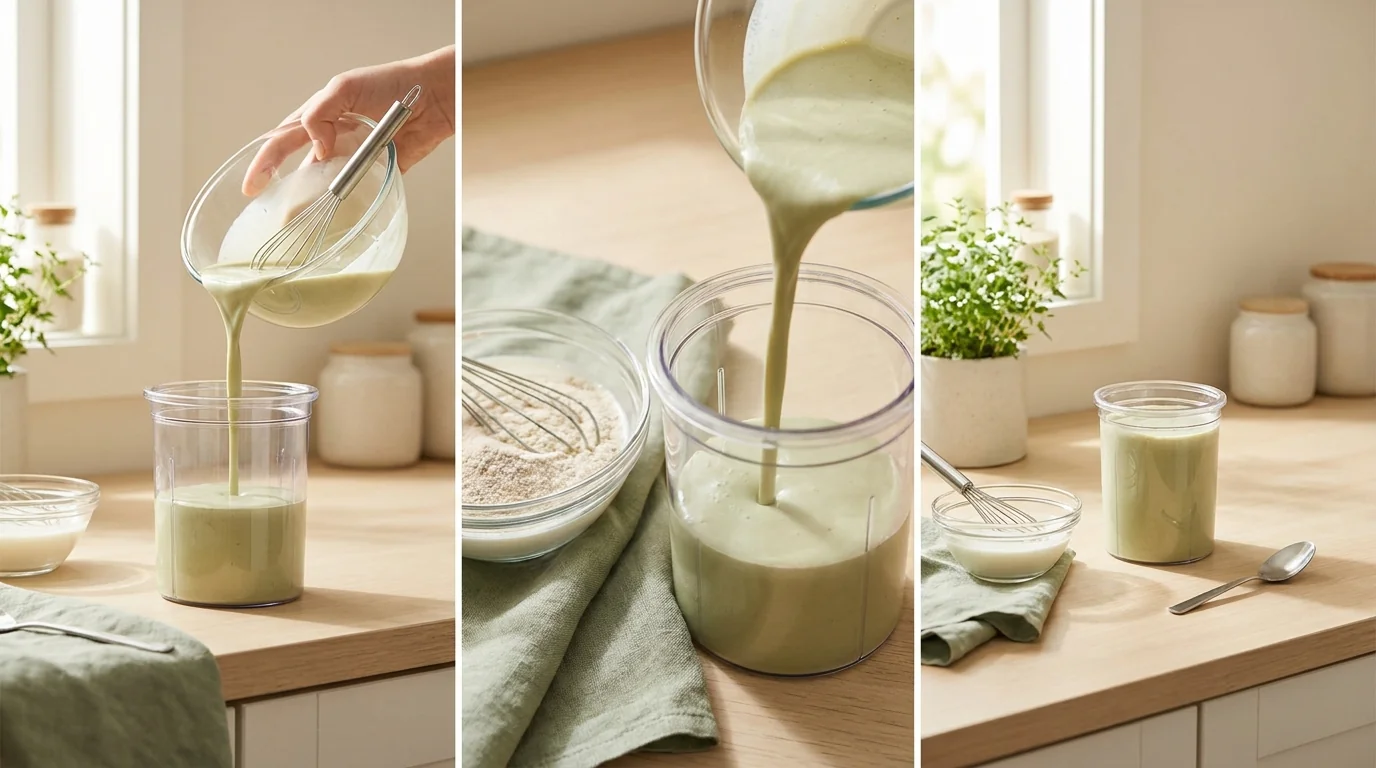
Tempering and respinning treat the symptom. The prevention is a base with enough dissolved solids and a binder, which is what a stabilizer mix is for. Whisked into the base before freezing, pudding mix does two things at once: the starch and protein bind free water so less of it is available to freeze into plain ice, and the added solids interrupt the crystal structure so the frozen pint shaves instead of shattering. The payoff shows up most on the second freeze, when a stabilized pint of leftovers stays scoopable while an unstabilized one turns to stone.
Simply Desserts Protein Pudding Mix (milk protein, kosher dairy, 5g protein per serving of mix and 20g per box, 0g added sugar) is our stabilizer of choice for dairy Creami bases. An honest note, because our sweetener science above demands it: the mix is sweetened with erythritol and stevia, the same erythritol we just told you freezes hard on its own. The difference is dose and matrix. Each serving carries just 3g of erythritol, and it arrives dissolved into a corn starch and milk protein network that binds water, so the mix behaves as a stabilizer first and a sweetener second. It will not turn a pint to rock the way heavy spoonfuls of straight erythritol can, and the 10 to 15 minute counter thaw still applies to any pint, stabilized or not.
Dosing matters, and more mix is not better (too much goes gummy). Our pudding mix dosing guide gives exact amounts per pint by model, or head straight to the Protein Pudding Mix shop page to get a box in the freezer rotation. For the full Fix-It Clinic, every texture problem and its cure lives on the Ninja Creami hub.