The short answer
Diagnose first, then fix. A powdery or crumbly pint has too much dry matter (usually protein powder) and needs liquid, fat and a binder. An icy pint has too much free water and needs solids, fat and a stabilizer, not more liquid. Apply the icy fix to a powdery pint, or the powdery fix to an icy one, and you make it worse. Run through the five questions below and you will land on the right fix in under a minute.
Powdery and icy are opposite failures
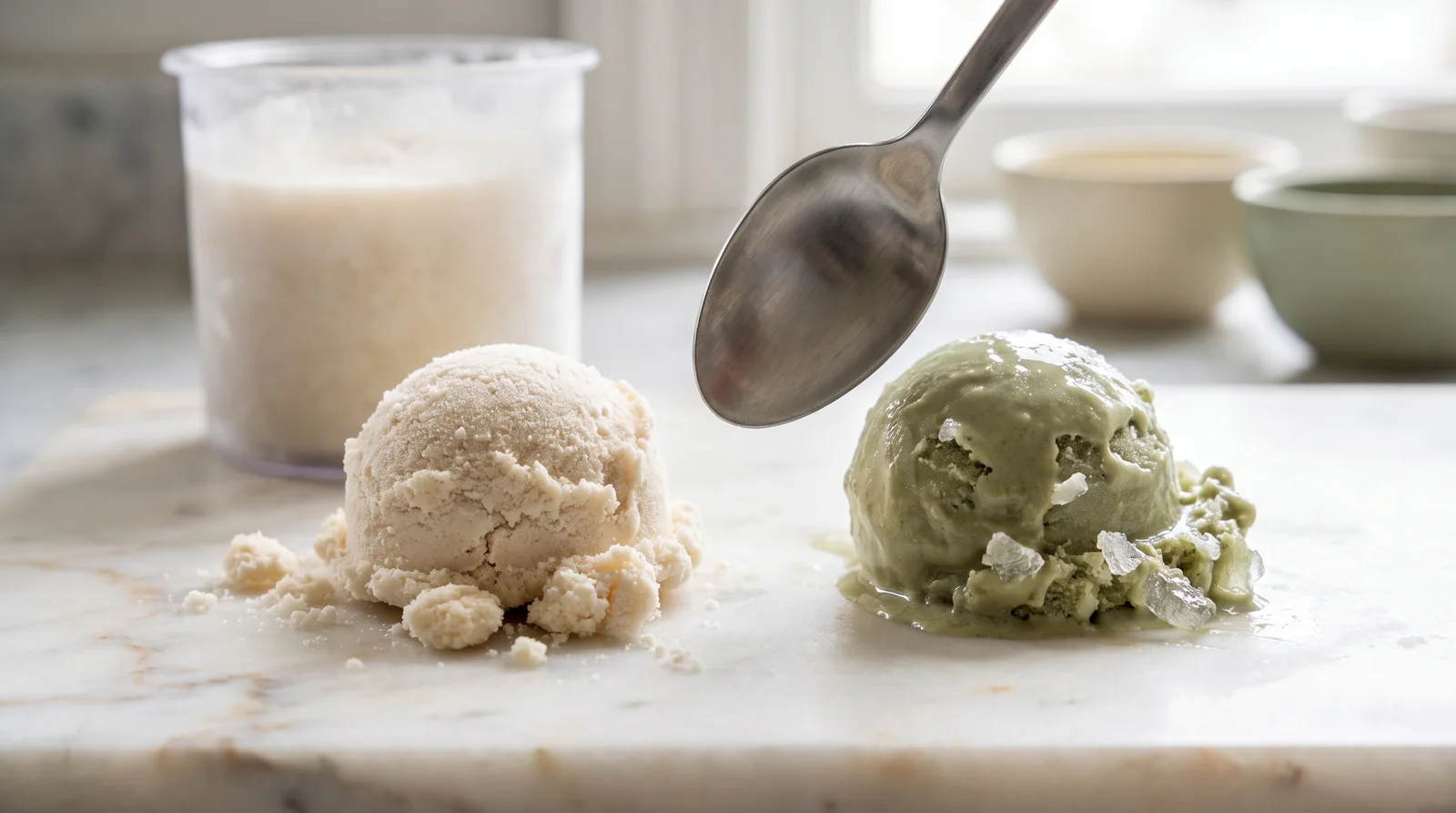
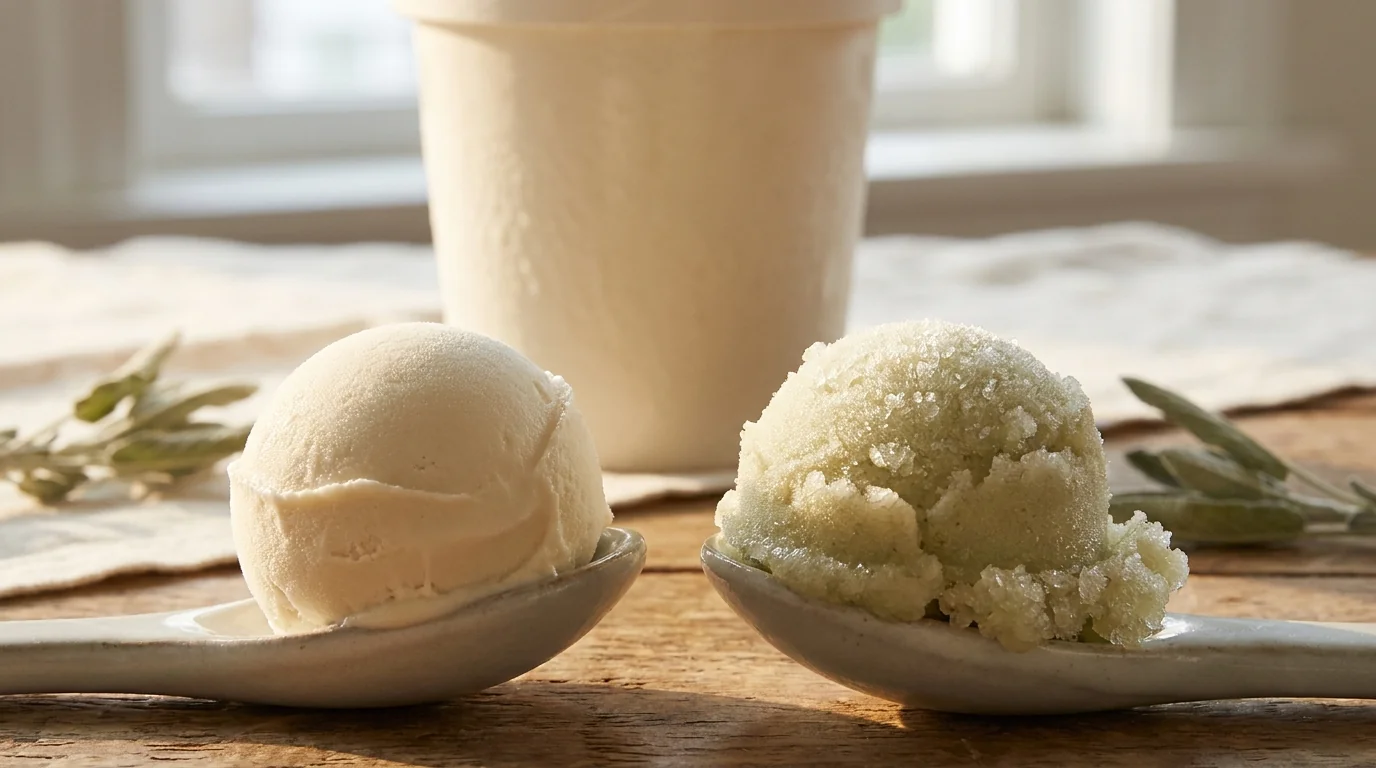
Most Ninja Creami troubleshooting advice treats "bad texture" as one problem with one cure-all answer, usually "add a splash of milk and respin." That advice is half right, half disastrous, because the two most common texture failures sit at opposite ends of the same seesaw:
| Powdery / chalky | Icy / crystalline |
|---|
| Feels like | Dry crumbs, dust, falls apart | Crunchy, gritty, frosty, wet |
| Root cause | Too much dry matter, not enough water binding | Too much free water, not enough solids or fat |
| Needs | Liquid, fat, a binder | Solids, fat, a stabilizer |
| Wrong fix | Adding more powder or protein | Adding more liquid |
This is why the seesaw happens. Creami owners describe adding a dash of milk to a powdery pint, exactly as the recipe said, and watching it swing straight past creamy into icy. The milk splash is a powdery fix: it rehydrates a base that is starved of free water. Pour it into a base that already has too much free water and no stabilizer to bind it, and that water simply freezes into crystals. Same move, opposite outcomes, depending entirely on which failure you started with.
So before you touch the pint, the recipe, or the respin button, answer the questions below in order.
The Ninja Creami texture-fix flowchart
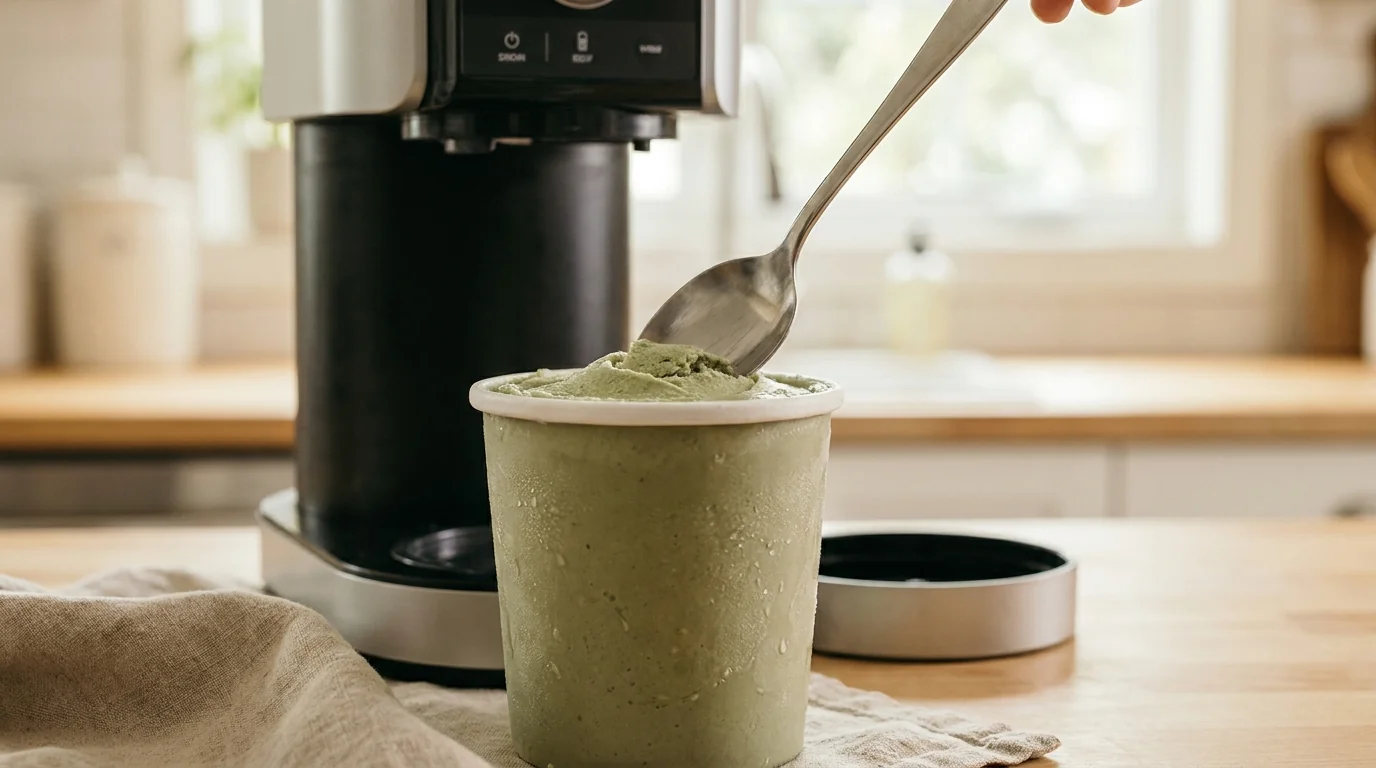
Start at question 1 with your just-spun pint in front of you. Answer honestly by look and feel, and follow the first "yes" you hit.
Start: my texture is wrong
1Is it dry, crumbly or chalky? Dusty crumbs that fall apart and will not hold a scoop?
Yes
That is the powdery failure: too much dry matter, not enough fat or bound water. Go to the chalky and powdery fix for the causes and the pudding-mix cure.
No
Not dry or crumbly. Move to question 2.
2Can you see or crunch ice crystals? Frosty, gritty and wet rather than smooth?
Yes
That is the icy failure: too much free water, not enough solids, fat or stabilizer. Go to the icy fix for the full ranked repair list.
No
No visible crystals. Move to question 3.
3Does it spin up fine but melt into soup within minutes?
Yes
Your base is short on solids and structure, so there is nothing holding the texture once it warms. Add a stabilizer to the base before freezing: see the pudding-mix guide.
No
Holds its shape fine. Move to question 4.
4Is it hard as a rock straight out of the freezer, before you have even spun it?
Yes
That is normal, not a failure: the machine is built to shave a solid block. Spin it, and if the result is still too firm, follow the respin guide. A dedicated rock-hard and leftover-storage guide is coming soon.
No
Not a hardness problem. Move to question 5.
5Is it powdery in one part of the pint AND icy in another?
Yes
That is a mixing or layering failure, not a recipe failure. The powder and the water never became one base. See the fix just below this flowchart.
No
None of these match? Browse every texture and machine guide in the Fix-It Clinic on the Ninja Creami hub.
The two branches most people land on
Around nine out of ten bad pints route through question 1 or question 2, and each has its own full guide so we will not repeat them here. The one-line versions: a powdery pint needs a splash of liquid, some fat and a binder before the respin (the powdery fix covers doses and prevention), while an icy pint needs fat, a freezing-point-friendly sweetener and a stabilizer in the base itself, because a respin alone just pushes the same crystals around (the icy fix ranks every option). The critical rule from the flowchart stands: never give a powdery pint the icy treatment or vice versa.
Melts fast but spins fine
A pint that spins beautifully and then collapses into milkshake within five minutes is not failing at the spin, it is failing at structure. Fat, protein and stabilizer are what hold a frozen dessert's shape as it warms; a lean, watery base has none of the three, so the moment the ice softens there is nothing left standing. The respin count is irrelevant here. Fix the base: more solids, some fat, and a starch-based binder before freezing.
Rock hard from the freezer
A frozen-solid pint scares new owners, but it is the expected starting state: the Creami is designed to shave a fully frozen block into cream. Problems only start if the pint is still crumbly or too firm after processing, and that is respin territory. The respin guide covers how many respins are safe, when to add liquid, and when to use a different program instead. We are also building a dedicated guide to rock-hard pints and storing leftovers, because refrozen leftovers freeze harder than a fresh base.
Powdery AND icy in the same pint
This one confuses people the most, because it looks like two contradictory failures at once. It is actually one failure: the base was never uniform. Undissolved powder sinks, clumps or clings to the pint walls and spins into chalky pockets, while the liquid it should have bound pools elsewhere and freezes into crystals. It often comes from dumping powder into the pint itself, layering ingredients without blending, or freezing the pint at an angle. The fix costs nothing: blend the base until completely smooth with no dry specks, let any foam settle before freezing, and freeze the pint dead level on a flat shelf. If you use a pudding or jel base, whisk it in fully before it ever touches the pint.
The universal preventer: a stabilizer base
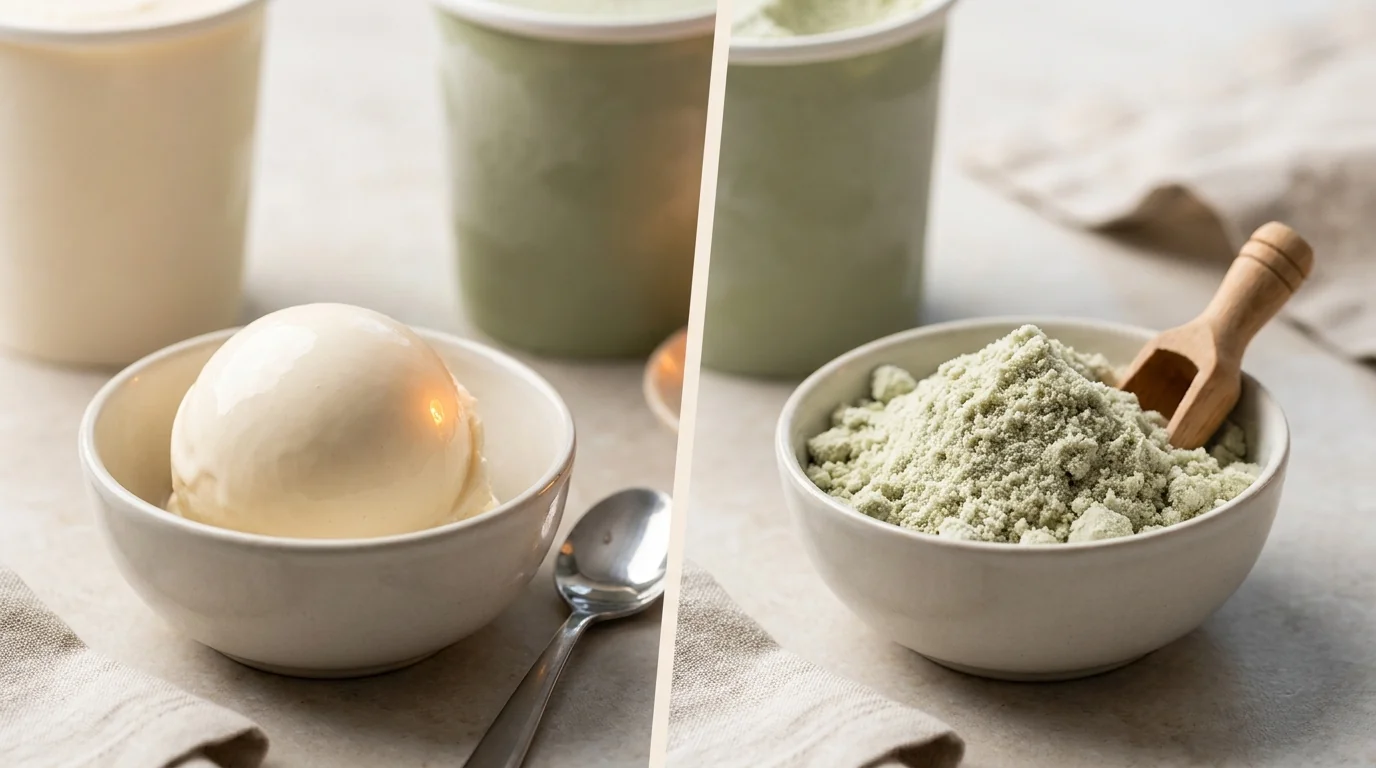
There is no single ingredient that rescues every bad pint after the fact, but there is one that prevents both failure modes before they start: a pudding-style stabilizer whisked into the base. It works on both sides of the seesaw at once. The starch in the mix binds free water so it cannot freeze into large crystals (the icy failure), and the mix itself adds solids and structure so the base does not shave into dust or collapse as it melts (the powdery failure). That is why one spoonful prevents two opposite problems, and why our whole system is built around it: the full method and doses are in the pudding-mix guide.
For a protein base, Simply Desserts Protein Pudding Mix does the stabilizing and the protein in one scoop: it is a dairy milk-protein pudding mix (contains milk, Kosher Circle K Dairy) with 5g protein per serving of mix (20g per box), 0g added sugar, sweetened with erythritol and stevia. For dairy-free fruit sorbets, the plant-based SD Jel Desserts handle the water-binding side without any dairy. To be honest about the limits: a stabilizer will not save a base that is nothing but protein powder and water with zero fat, and it will not make a cookie-loaded pint sugar-free. It prevents the common failures; it does not repeal food science.
Shop the Protein Pudding Mix range if you want the base that makes the rest of this flowchart mostly unnecessary.